
Artificial intelligence video generation has advanced at an incredible pace in 2026. Every few weeks, a new model promises movie-quality visuals, realistic physics, better lip sync, and longer video generation. But once you begin creating real content, marketing videos, or cinematic scenes, you quickly discover that not every model excels in every situation.
Some generators produce stunning close-up shots but struggle with fast-moving action. Others offer exceptional audio quality while sacrificing video length or affordability.
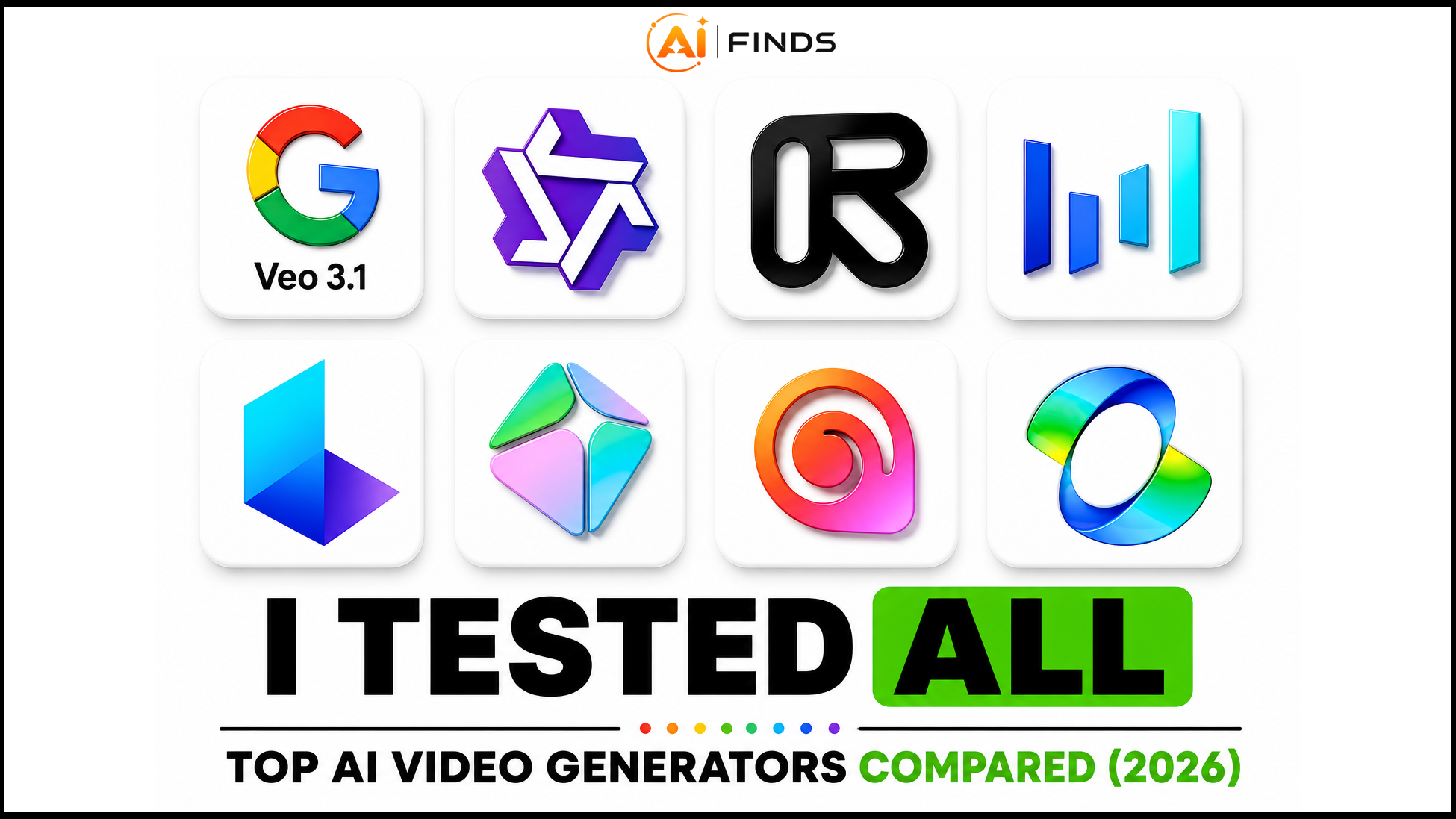
To better understand the strengths and weaknesses of the leading AI video generators available in 2026, we compared five popular models using identical creative scenarios through the Higgsfield platform.
- Seedance 2.0
- Kling 3.0
- Google Veo 3.1
- Grok Imagine
- Wan 2.7
Note: The scores below represent comparative benchmark observations from our testing workflow and are intended to help creators choose the right tool for different production needs.
Testing Methodology
Each model was evaluated using the same prompts and creative scenarios to compare consistency, realism, motion handling, audio quality, and overall production value.
The evaluation focused on four areas:
- Realistic physics
- Audio and lip synchronization
- Complex character movement
- Cost versus usable output
Test 1: Physics & Realistic Motion
Scenario
A character sprints toward a lake, removes a shirt while running, and dives into the water, creating a realistic splash.
This type of sequence challenges every AI model because it combines:
- Fast body movement
- Clothing simulation
- Water physics
- Camera tracking
- Object interaction
Results
🥇 Seedance 2.0 — 9.5/10
Seedance delivered the most convincing physical realism.
Water displacement looked natural, clothing behaved realistically, and the dive maintained believable momentum throughout the sequence.
Strengths
- Excellent body motion
- Natural water effects
- Strong environmental interaction
🥈 Kling 3.0 — 9/10
Kling produced an impressive cinematic slow-motion effect.
Although clothing simulation occasionally looked slightly artificial, overall movement remained fluid and believable.
Strengths
- Smooth animation
- Great cinematic feel
- Excellent value
🥉 Google Veo 3.1 — 8.5/10
Veo generated beautiful cinematic imagery with outstanding lighting.
However, gravity occasionally appeared slightly “floaty,” reducing realism during high-speed motion.
Strengths
- Gorgeous visuals
- Excellent lighting
- Premium cinematic quality
Grok Imagine 6/10
Movement quality varied significantly between generations, making consistency difficult.
Wan 2.7 — 5/10
Wan struggled with realistic clothing transitions.
Instead of naturally removing clothing, objects frequently disappeared abruptly, breaking immersion.
Test 2: Audio Quality & Lip Synchronization
Scenario
A character speaks beside a campfire while environmental sounds remain synchronized with dialogue.
This benchmark evaluates:
- Voice quality
- Lip sync
- Ambient audio
- Speech timing
Results
🥇 Google Veo 3.1 — 10/10
Veo clearly led this category.
Dialogue sounded remarkably natural, while environmental sounds such as crackling fire blended seamlessly into the scene.
Lip sync remained accurate throughout.
🥈 Seedance 2.0 — 9.5/10
Seedance produced highly accurate mouth movement and excellent speech timing.
Voice quality remained consistent even during camera movement.
🥈 Kling 3.0 — 9.5/10
Kling matched Seedance closely with smooth facial animation and reliable lip sync.
Grok Imagine — 3/10
Speech often sounded robotic with inconsistent timing.
Several generations contained skipped words or unnatural pacing.
Wan 2.7 — 2/10
Audio quality was the weakest among the tested models, with frequent synchronization issues.
Test 3: Complex Action & Fight Scenes
Scenario
Two characters perform a fast-paced martial arts fight with punches, reactions, and continuous movement.
This benchmark measures:
- impact physics
- multi-character tracking
- timing
- consistency
Results
🥇 Seedance 2.0 — 10/10
Seedance produced the most convincing action sequences.
Hits appeared to carry realistic weight, reactions matched impacts, and movement remained coherent throughout the fight.
🥈 Kling 3.0 — 8/10
Kling generated stable combat animation but occasionally showed slightly delayed reactions between characters.
Google Veo 3.1 — 6/10
Although visually attractive, combat lacked convincing impact and often resembled choreographed movement rather than realistic fighting.
Grok Imagine — 6/10
Performance was similar to Veo in this category but less consistent across multiple generations.
Wan 2.7 — 5/10
Complex interactions frequently lost continuity, making long action sequences difficult to use.
Cost vs. Value Comparison
| Model | Max Clip Length | Resolution | Approximate Cost | Best For |
|---|---|---|---|---|
| Seedance 2.0 | 15 seconds | 1080p | High | Action, VFX, cinematic scenes |
| Kling 3.0 | 15 seconds | 1080p | Low | Daily content creation |
| Google Veo 3.1 | 8 seconds | 4K | Medium–High | Commercials and dialogue |
| Grok Imagine | 15 seconds | 720p | Low | Experimentation |
| Wan 2.7 | 15 seconds | 1080p | Medium | General-purpose generation |
Pros & Cons
Seedance 2.0
Pros
- Best action realism
- Excellent physics
- Outstanding character interaction
- Consistent results
Cons
- Premium pricing
- Higher credit usage
Kling 3.0
Pros
- Excellent value
- Reliable quality
- Strong overall performance
- Great balance between cost and output
Cons
- Minor physics imperfections
- Slightly weaker than Seedance in demanding scenes
Google Veo 3.1
Pros
- Outstanding audio
- Best lip synchronization
- Beautiful cinematic quality
- Native 4K output
Cons
- Shorter clip length
- Higher production cost for longer scenes
Grok Imagine
Pros
- Affordable
- Easy to experiment with
Cons
- Weak audio
- Lower consistency
- Limited production quality
Wan 2.7
Pros
- Decent image quality
- Supports longer clips
Cons
- Inconsistent motion
- Weaker physics simulation
- Difficult to recommend over similarly priced alternatives
Final Verdict
There is no single AI video generator that dominates every category.
Each model serves a different type of creator.
Choose Seedance 2.0 if:
- You create action scenes
- You need realistic physics
- You produce cinematic films
- Visual quality matters more than cost
Choose Kling 3.0 if:
- You publish content regularly
- You want excellent value
- You need dependable everyday performance
Choose Google Veo 3.1 if:
- Audio quality is your priority
- You produce commercials
- You need premium cinematic dialogue
- You want crisp 4K visuals
Choose Grok Imagine if:
- You are experimenting with AI video
- Budget is your primary concern
Choose Wan 2.7 if:
- You already use its ecosystem
- Your projects don’t rely heavily on complex motion
Recommended Workflow
Professional creators don’t have to rely on a single model.
A practical workflow is to use:
- Kling 3.0 for everyday B-roll and social media clips.
- Google Veo 3.1 for dialogue-heavy scenes requiring premium audio.
- Seedance 2.0 for action sequences, VFX shots, and demanding cinematic moments.
Using multiple models allows you to optimize quality, production speed, and budget for every project.
Frequently Asked Questions
Which AI video generator is best in 2026?
Based on our benchmark testing, Seedance 2.0 delivered the strongest overall performance for realistic motion and action scenes, while Google Veo 3.1 excelled in audio quality and Kling 3.0 offered the best balance of quality and affordability.
Which AI model has the best lip sync?
Google Veo 3.1 produced the most natural voice and lip synchronization in our comparison.
Which AI video generator offers the best value?
Kling 3.0 provided the strongest cost-to-performance ratio, making it an excellent choice for creators producing content at scale.
Is it better to use one model or multiple models?
Many creators achieve better results by combining different models, using each where it performs best instead of relying on a single generator.
